What if desalination has been solving the wrong problem for 50 years?
Zero-Carbon Water. Zero Grid Required.
XPRIZE Water Scarcity — Qualifying Team
THE INSIGHT
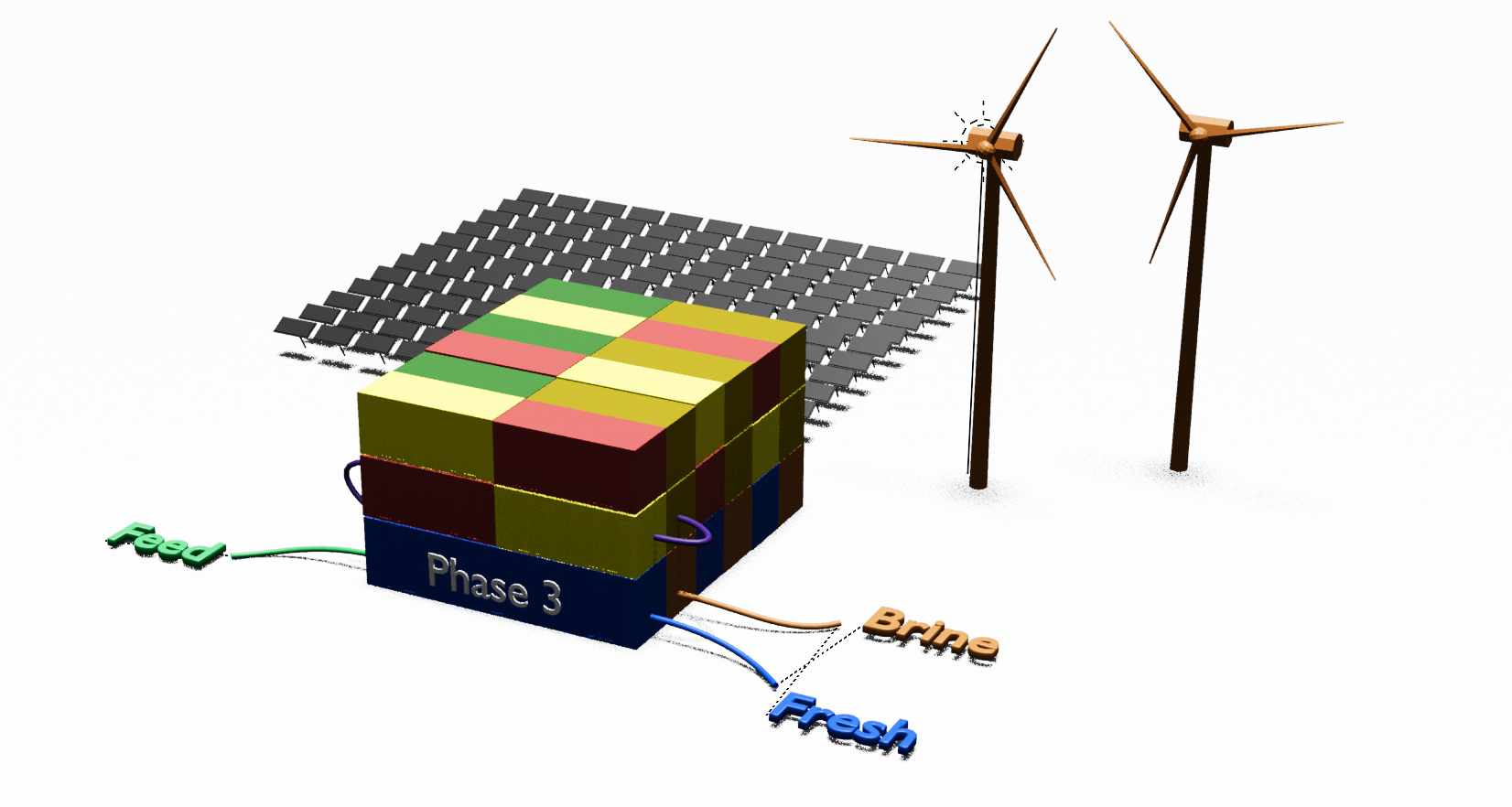
Off-grid systems that rely on renewables require expensive battery banks to store energy and enable continuous operation. Modulus inverts the problem: we store the product — water — in cheap tanks and run desalination when renewable energy is abundant. AI controllers predict solar availability and dynamically optimize production schedules in real time. The result: maximum output per renewable kilowatt, minimal battery cost, immediate deployment.
Predictive algorithms match desalination output to renewable energy availability in real time, maximizing throughput without expensive energy storage.
Standard shipping containers house complete treatment systems. Deploy in weeks, not years. No custom construction. No permit delays.
No grid connection required. Solar-powered with minimal battery backup. Operates independently in remote or austere environments.
APPLICATIONS
When disaster strikes, communities can't wait years for permanent infrastructure. Our systems deploy to crisis zones in weeks, delivering potable water when it's needed most.
Learn more →High-value coastal agriculture needs reliable supplemental water. Our equipment generates revenue between emergencies, enabling sustainable farming in water-stressed regions.
Learn more →Forward-deployed water independence for military operations. Purpose-built for austere environments where supply lines are vulnerable and self-sufficiency is non-negotiable.
Learn more →WHY NOW
Extreme weather creates water emergencies that expose the fragility of centralized infrastructure. After Hurricane Maria, Puerto Rico paid $15–$38 per gallon for emergency water. Yet 2.1 billion people still lack access to safe drinking water. Traditional desalination takes 5–14 years to deploy — time communities in crisis don't have.